 Office System

CAAI Newsroom
GAITC 2026: From Admiration to Application - AI's Descent Seen at Global AI Technology Congress
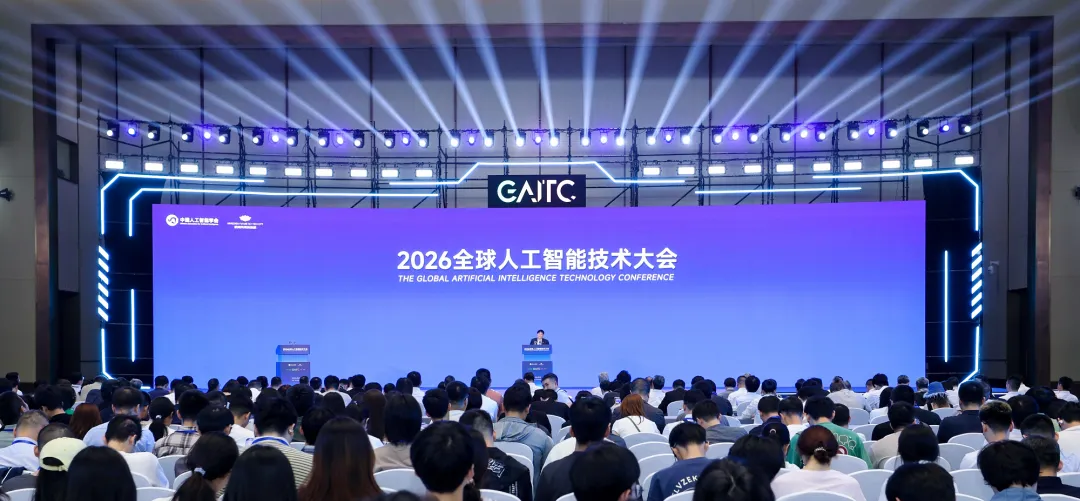
In Hangzhou in May, the air already carried the heat of summer, but stepping into the venue of the 2026 Global Artificial Intelligence Technology Congress (GAITC 2026), one felt a different kind of temperature shift. Looking back over the past two or three years, the frenzy around large models had pushed AI onto a pedestal of public discourse. Back then, people were keen on discussing emergence and intelligence explosion. Most viewed AI with a sense of awe, worrying whether they might be replaced by the technology tomorrow.
But by 2026, the tide has gradually receded. This seventh iteration of the congress held in Yuhang from May 23 to 24 felt more like an exercise in measurement. People are no longer just asking how large a model is, but rather what problems it solves. They are no longer solely chasing the arrival of artificial general intelligence, but are more concerned with how AI can create value in specific industries. The heat of technology needs to be transformed into industrial value, and a calm, pragmatic industry consensus is emerging: AI is moving from a star technology in the spotlight to an accessible production tool across all sectors. It is precisely at this industrial inflection point that GAITC 2026 was held for the seventh time in Hangzhou Future Sci-Tech City from May 23 to 24, 2026.
Add:No. 10, Xitucheng Road, Haidian District, Beijing Postal Code:100876
Copyright © 2026 Chinese Association for Artificial Intelligence 互联网ICP备案:京ICP备06029423号-1  京公网安备11010802045678号
Technical support:中科服 18911522009
【本网站翻译内容来源于AI】