 Office System

CAAI Newsroom
CCIS 2019 Held Successfully in Singapore
From December 19 to 21, the 6th IEEE International Conference on Cloud Computing and Intelligent Systems (CCIS 2019), hosted by Chinese Association for Artificial Intelligence (CAAI), was successfully held in Singapore. More than 40 experts in the field of cloud computing and artificial intelligence at home and abroad gathered, held 3 keynote speeches, 1 Industrial forum and 5 thematic forums, and collected 40 excellent papers, comprehensively presenting the breakthrough and research trend of the global academic community.
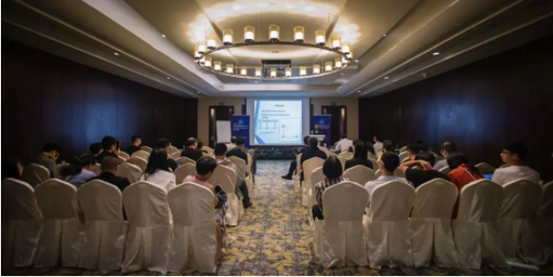
As a cutting-edge international exchange platform, CCIS is an important international activity in a series of measures taken by the CAAI to build a world-class association, deepen international exchange and cooperation, and enhance the influence of China's artificial intelligence in the world. It was initiated in 2010 by the CAAI and Beijing Branch of Institute of Electrical and Electronics Engineers (IEEE). CCIS is high-end in specification, broad in vision and rich in content. Discussion included mainstream technologies such as machine learning, computational intelligence, big data, computer vision, pattern recognition and deep learning.
With the increasing international influence of the past five conferences, CCIS was invited to land in Singapore this year, jointly sponsored by Tsinghua University and National University of Singapore, two world-renowned universities. Deyi LI, honorary president of the CAAI and academician of Chinese Academy of Engineering (CAE), Professor Tat Seng Chua of National University of Singapore, Professor Bing LIU of University of Illinois, Chicago, USA, served as chairman of the conference; Xizhao WANG of Shenzhen University, Professor Xiangnan HE of University of science and technology of China, served as chairman of the program committee; Weining Wang, Secretary General of the CAAI, National University of Singapore Professor Zhiyong Huang and Dr. Xiang Wang of National University of Singapore served as the chairman of the organizing committee.
Professor Tat Seng Chua of National University of Singapore and Professor Xiangnan HE of University of science and technology of China addressed the meeting. Fuchun SUN, vice president of China artificial intelligence society, Professor of Tsinghua University, IEEE / CAAI fellow, Dr. Bin WANG, director of Artificial Intelligence Laboratory of Xiaomi company and chief scientist of NLP, and Ng Hwee Tou, Professor of dean's lecture of National University of Singapore, respectively made keynote reports.
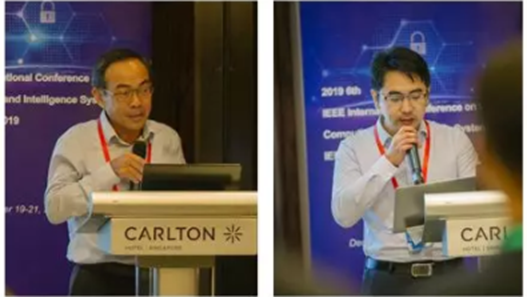
Tat-Seng Chua、Xiangnan HE(from left to right)
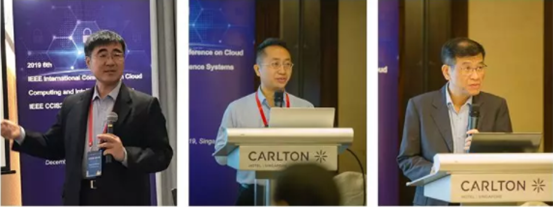
Fuchun SUN、Dr. Bin WANG、Ng Hwee Tou(from left to right)
At the conference, four scholars from different regions participated in the industrial forum and held a round table discussion. The 40 excellent papers collected were divided into five thematic forums, including natural language processing, data mining, computer vision, intelligent system, etc. for exchange, with comprehensive and novel contents, showing the latest trends and directions of current academic research, providing a rare opportunity for interdisciplinary exchange and close interaction for scholars from all over the world, and helping the young scholars to develop new ideas and methods in learning and research.
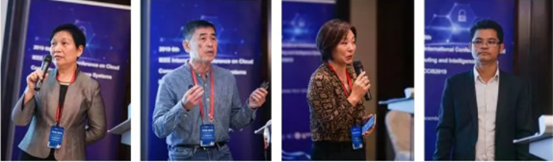
Dr. ShenJane, Pensees Pte Ltd; Dr. Simon See, Nvidia AI Technology Centre; Vera Jin, Sopra Steria Asia; Dr. Pongsak Lasang, Panasonic(from left to right)
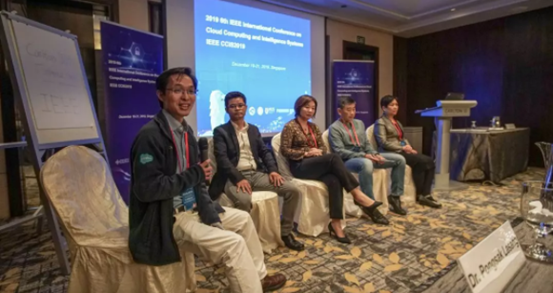
Round table of Industrial Forum
After nomination and evaluation by the Award Committee, one paper won the first prize of "excellent paper award" and two papers won the second prize of "excellent paper award".
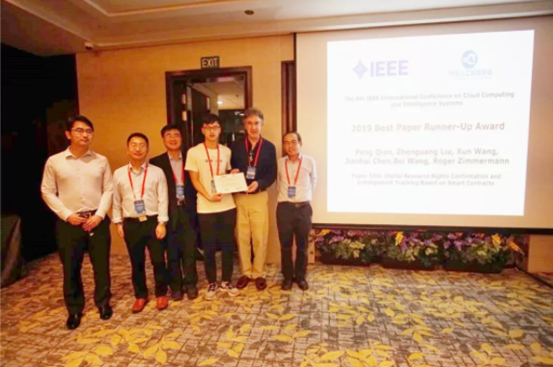
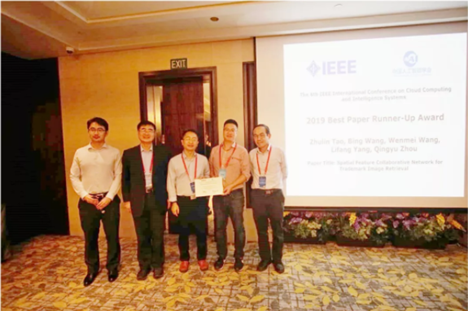
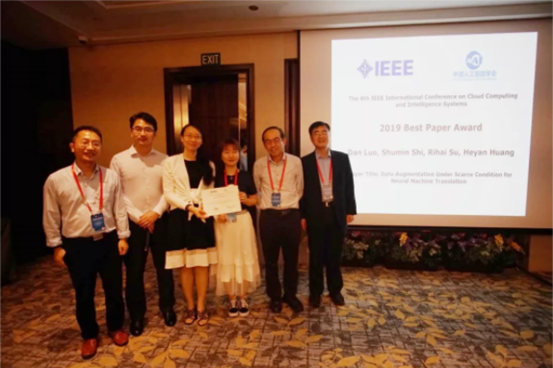
Prize winners
With the successful ending of this conference in Singapore, an international innovation city, CCIS has taken a new step on the road of internationalization, and the interdisciplinary and international exchanges between cloud computing and artificial intelligence have become closer.
In the future, in the process of building a world-class association and promoting international exchange and cooperation, the CAAI will further play the role of resource advantages and ties, build more international exchange platforms with high specifications and wide influence, promote the integration and complementary advantages of Chinese scholars and world scholars, and create a new pattern of sharing and win-win pattern in the academic field.
Add:No. 10, Xitucheng Road, Haidian District, Beijing Postal Code:100876
Copyright © 2026 Chinese Association for Artificial Intelligence 互联网ICP备案:京ICP备06029423号-1  京公网安备11010802045678号
Technical support:中科服 010-83869879
【本网站翻译内容来源于AI】