 Office System

CAAI Newsroom
CAAI Chairman Dai Qionghai's Team Conducts Long-term Observation of Mammals
The unswerving pursuit of high-speed, high-resolution and long-term observation capabilities of living organisms runs through the centuries of development history of microscopy technology. It is an icebreaker for life science and medical research, and a pioneer in discovering new phenomena and revealing new mechanisms. However, due to the limitations of three-dimensional tissue distribution, optical aberrations, phototoxicity and many other stalemate problems, high-speed subcellular resolution and long-term observations in the living environment of mammals are always unresolved, which greatly restricts in-depth research such as brain science, oncology and immunology.
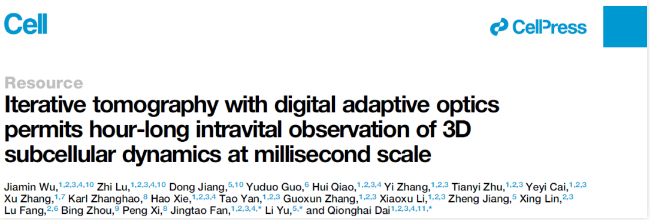
On May 25, 2021, CAAI chairman, Tsinghua University Institute of Brain and Cognitive Sciences, Academician Dai Qionghai of the Department of Automation, and Yu Li from the School of Life Sciences collaborated to publish a research paper titled Iterative tomography with digital adaptive optics permits hour-long intravital observation of 3D subcellular dynamics at millisecond scale on Cell. The team uniquely proposed a digital adaptive optics framework, invented scanning light field imaging technology, after three years of research, developed a scanning light field microscope, collectively known as (Digital Adaptive Optics Scanning Lightfield Mutual Iterative Tomography, DAOSLIMIT). Within the imaging field of view of 225×225×16 μm3, DAOSLIMIT improves the three-dimensional continuous observation time of the living body in milliseconds from several minutes to hours with the optical diffraction limit resolution of 220nm in the lateral direction and 400nm in the axial direction, and the spatial and temporal resolution of in vivo imaging is improved. Two orders of magnitude, phototoxicity is reduced by three orders of magnitude, which provides a new way to reveal the interaction between multicellular and multicellular organelles in living mammals.
Traditional light field microscopes can record sample multi-angle information in a single shot to achieve fast three-dimensional imaging, but the spatial resolution and angular resolution cannot be balanced; DAOSLIMIT introduces spatial stacking constraints through the small-range vibration of the high-speed galvanometer, Obtaining high-resolution spatial and angular four-dimensional full-light field information with full photon efficiency, realizing incoherent aperture synthesis, and then using the sample spatiotemporal continuity prior to avoid the loss of time resolution caused by scanning.
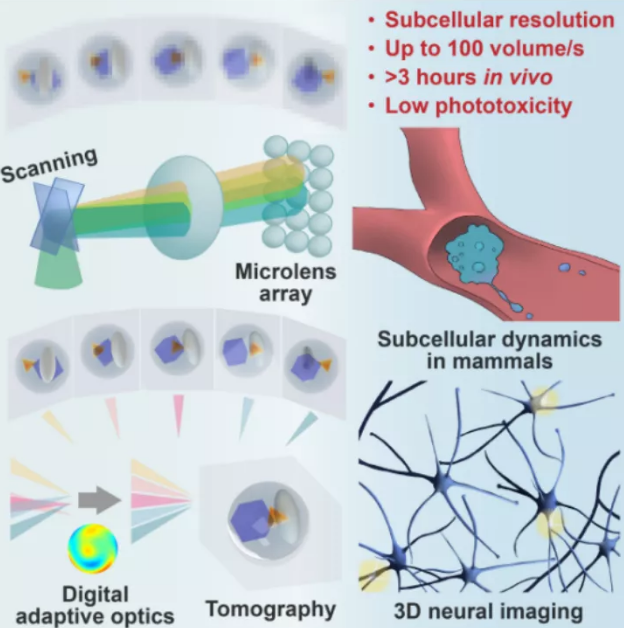
Figure 1. DAOSLIMIT system concept and principle application schematic
A major factor hindering the observation of living tissues is the severe optical aberration caused by the different three-dimensional spatial distribution of the sample refractive index, which significantly reduces the spatial resolution of microscopic imaging.Traditional adaptive optical microscopes derived from astronomical observations can only achieve aberration correction imaging in a small field of view even through complex software and hardware. DAOSLIMIT has established a new digital adaptive optics (DAO) imaging framework without the need for additional wavefront sensors or spatial light modulators. It decouples signal acquisition and adaptive wavefront correction by acquiring four-dimensional all-optical information, and realizes large-scale spatial block adaptive optical correction in the post-processing process, and improves the spatial resolution to the optical diffraction limit.
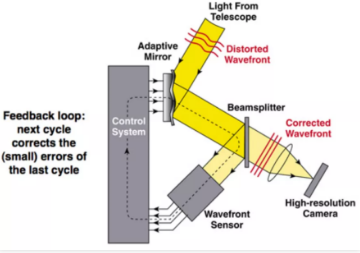
Figure 2. Schematic diagram of adaptive optics principle [1]
The phototoxicity problem caused by light is another long-term pain point of in vivo fluorescence imaging.Rotating disc confocal microscope (SDCM), two-photon microscopy due to the existence of non-imaging laser irradiation area, continuous high-speed shooting for a few minutes will bring severe photobleaching/photodamage effects to the sample; light sheet microscope (LSM) alleviates this problem by stimulating only the focal area, but cannot maintain subcellular resolution in opaque tissues. DAOSLIMIT adopts the mode of simultaneous excitation and simultaneous acquisition in the same three-dimensional area. Through the expansion of the axial depth of field, each photon is fully utilized for imaging. Compared with conventional microscopes, DAOSLIMIT only needs the excitation light intensity of the order of μW to obtain a sufficient signal-to-noise ratio, which reduces the phototoxicity by a full three orders of magnitude. For the first time in the world, a high-speed and continuous observation at the millisecond level for several hours in a mammalian body has been realized.
Figure 3. Comparison of phototoxicity between DAOSLIMIT and SDCM, Two-photon microscopy in live mouse spleen imaging experiment
Migrasome is a new organelle recently discovered and named by Yu Li's laboratory. It is now known that migrasome plays an important role in embryonic development and the maintenance of immune system homeostasis.With the help of DAOSLIMIT, it is possible to create a new field of research on the functions of migrating bodies in the living environment of mammals. The researchers stained neutrophils and blood vessels separately, and performed multicolor imaging in the liver of living mice. For the first time, they clearly observed the production and changes of migratory bodies and filopodia in mammals. "Through DAOSLIMIT, we have observed that immune cells leave many migrating bodies during the movement of the blood vessels in the liver of living mice. Immune cells may realize a wide range of information exchanges through the generation of migrating bodies, as well as the long-distance effect between cells. It may be a new mechanism. These migrants are like the beacon towers of the Great Wall, and may play a key role in transmitting signals in a series of complex reactions such as immune surveillance." Professor Yu Li said.
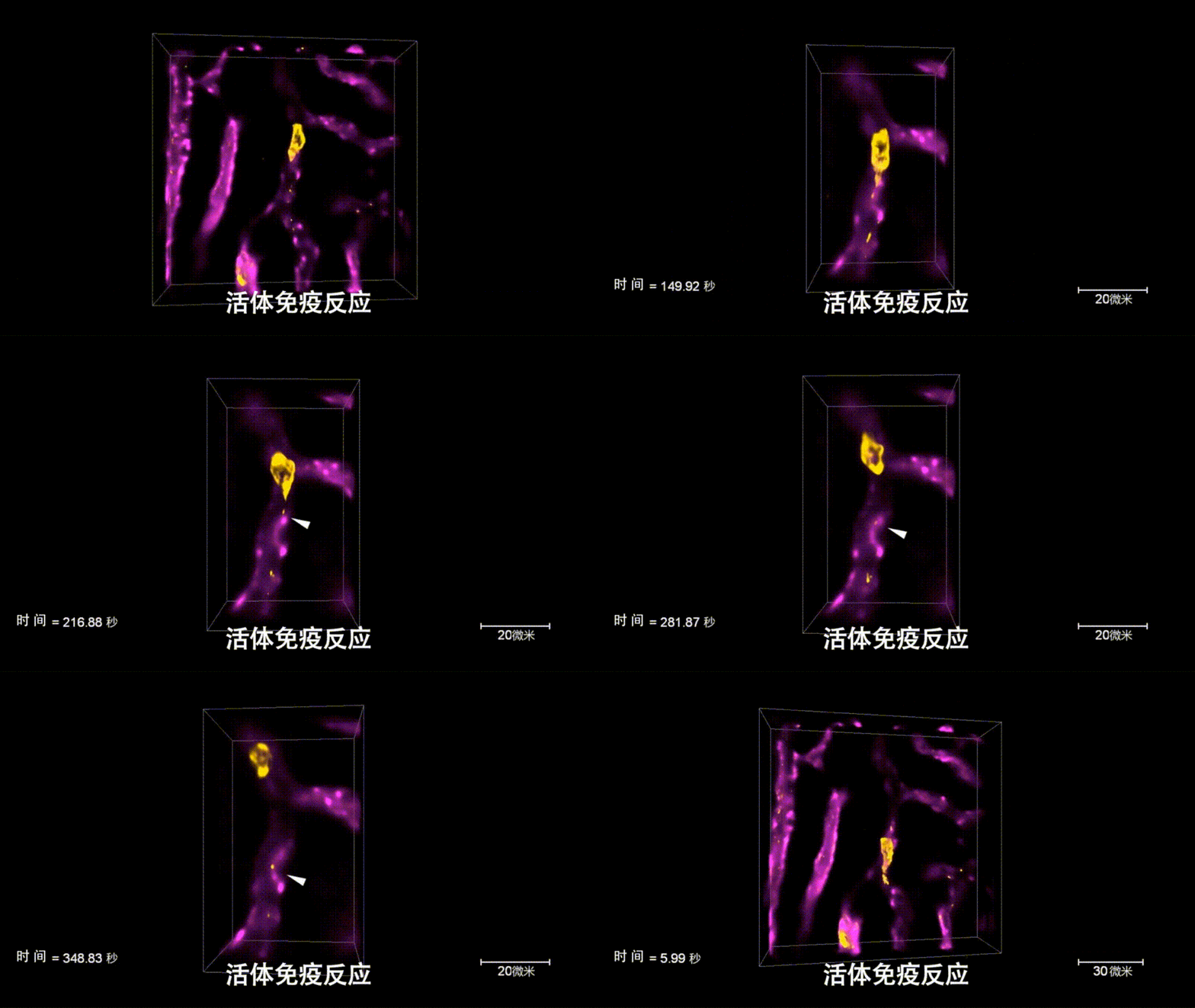
Figure4. High-speed and high-resolution imaging of the immune response in the liver of living mice (GIF image)
The researchers further injected human tumor cells into living zebrafish larvae. With the help of DAOSLIMIT's extremely weak phototoxicity, they discovered a new phenomenon in which tumor cells actively adapt to the environment through vesicles and filamentous structures during continuous high-speed and long-term observation. Professor Dai Qionghai pointed out that "new instrument technology provides new paths for life science and medical research, and these interesting new phenomena are just the tip of the iceberg. With technological progress, the discovery of more new phenomena and the reveal of new mechanisms in the future are expected to help major basic research related to people's lives and health, such as brain science, tumor, and immunity, to produce new breakthroughs."
Figure 5. High-speed and high-resolution imaging of live tumor metastasis in live zebrafish
Wu Jiamin, postdoctoral fellow in the Department of Automation of Tsinghua University, Lu Zhi, a doctoral student, and Jiang Dong, a postdoctoral fellow in the School of Life Sciences, are the co-first authors of the paper. Professor Dai Qionghai from the Department of Automation of Tsinghua University, Beijing National Research Center for Information Science and Technology, and the Institute of Brain and Cognitive Sciences, Associate researcher Fan Jingtao and Professor Yu Li from the School of Life Sciences are the co-corresponding authors of the paper. It is reported that related technologies are already being transformed.
Original link:
https://doi.org/10.1016/j.cell.2021.04.029
Plate maker: Eleven
Bibliography
[1] Max C. "Introduction to adaptive optics and its history." American Astronomical Society 197th Meeting. NSF Center for Adaptive Optics University of California at Santa Cruz and DOE Lawrence Livermore National Laboratory. (2001).
Quote from BioArt
Executive editor: Jia Xu
Original link: https://mp.weixin.qq.com/s/ab1Tq6hIiIFOHx7P-8GHBQ
CAAI
May 25, 2021
Link:
https://www.caai.cn/index.php?s=/home/article/detail/id/1328.html
Add:No. 10, Xitucheng Road, Haidian District, Beijing Postal Code:100876
Copyright © 2026 Chinese Association for Artificial Intelligence 互联网ICP备案:京ICP备06029423号-1  京公网安备11010802045678号
Technical support:中科服 010-83869879
【本网站翻译内容来源于AI】